

A Comprehensive Guide to 1 ml of Filler Volume Amount

What Does 1 ml of Filler Actually Look Like?

1 ml of filler is about one-fifth of a teaspoon. That sounds tiny, but in the lips it can create a noticeable change. The result may look subtle or more pronounced depending on your natural lip shape, the type of filler, and how it is placed. A 1 ml syringe is a common size, not a dose everyone needs.
If you want a natural look, the best starting point is an assessment of your facial proportions and goals. That early swelling can make your lips look fuller than the settled result.
I'm Aalaa Ahmad, MSN, APRN, FNP-BC, a board-certified nurse practitioner at Loveland Medical Spa in Aventura, Florida, with over 14 years of clinical experience, including a decade in intensive care and neuroscience. I use that background to plan personalized injectable treatments and help patients decide whether 1 ml of filler fits their anatomy and goals.

Understanding What 1 ml of Filler Looks Like Across Different Facial Areas
When people first explore cosmetic injectables, visualizing metric measurements inside facial tissue can be tricky. One milliliter sounds negligible—after all, a single standard teaspoon holds five full milliliters. Yet, when placed strategically within facial compartments, that fraction of a teaspoon creates meaningful, harmonious structural shifts.
Because human facial skin and subcutaneous layers are delicate, even small micro-droplets of cross-linked gel yield visible contour adjustments. The final visual impact depends entirely on the anatomical destination:
In compact, mobile areas (like the lips): 1 ml represents a significant volume enhancement, visibly augmenting height, border definition, and mucosal fullness.
In broad, structural regions (like the midface or jawline): 1 ml delivers soft, subtle support or targeted contour rather than dramatic structural reshaping.
Using facial fillers effectively requires balancing your aesthetic goals with your natural tissue capacity so the finished result looks organic rather than overfilled.
What 1 ml of Filler Achieves in Lip Enhancement

For patients seeking lip fillers, a single 1 ml syringe is often considered the classic standard for a complete, balanced enhancement. It provides enough volume to refine several distinct anatomical landmarks in a single session:
Vermilion Border Definition: Tracing the crisp outer edge to prevent lipstick bleeding and restore sharp demarcation.
Cupid’s Bow Shaping: Accentuating the natural peaks of the upper lip for a contoured, youthful architecture.
Tubercle Plumping: Adding soft projection to the central cushions of the upper and lower lips.
Asymmetry Correction: Balancing discrepancies between the left and right sides, or harmonizing the golden ratio between the upper and lower lip.
Hydration Boost: Smoothing superficial vertical fissures to give a supple, naturally refreshed sheen without overwhelming the face.
In modern aesthetic practice, natural results have firmly replaced over-inflated trends. A carefully placed syringe offers subtle volume while preserving soft, dynamic movement when you smile, speak, and laugh.
Cheek, Tear Trough, and Smile Line Applications
Beyond the lips, a single milliliter can address age-related volume loss in various areas of the face:
Cheeks and Midface: When selecting the best filler for cheeks, 1 ml can be split between both sides (0.5 ml per cheek) to subtly highlight the apex of the cheekbones and provide light lifting support to the midface.
Tear Troughs: Delicate hollows under the eyes require conservative correction. A low volume of specialized under eye fillers restores smooth transitions between the lower eyelid and cheek, diminishing dark shadows.
Perioral Lines: Applying targeted dermal fillers for smokers lines softens etched vertical creases around the mouth, smoothing the skin's texture without projecting the lip outward.
Comparing Dosage Levels: From Subtle Plump to Full Correction
Navigating filler quantities can feel confusing, but understanding volume progression ensures you achieve balanced, predictable rejuvenation.

Comparing 0.5 ml, 1.5 ml, and 1 ml of Filler Volumes
Every patient's facial anatomy is unique, which means dosing must always be customized. Here is how common volume ranges compare in clinical practice:
Volume Amount | Typical Facial Targets | Visual Effect | Ideal Candidate Profile |
0.5 ml | Subtle lip hydration, slight asymmetry correction, delicate tear troughs | Extremely subtle, "barely-there" refresh; smooths lines without obvious size increase | First-time lip patients wanting minimal change, touch-up sessions, or fine line smoothing |
1.0 ml | Full lip enhancement, split cheek highlight (0.5 ml/side), nasolabial folds | Noticeable yet refined enhancement; visible plumpness, restored borders, refreshed contours | Patients seeking visible plumping, hydration, border definition, or targeted structural rejuvenation |
1.5 ml | Lips built across staged appointments, combined lips + marionette lines | Distinct, voluptuous fullness or multi-area rejuvenation across connected zones | Experienced filler patients, thinner baseline lips seeking buildable volume over time |
2.0 ml+ | Full facial contouring, multi-area structural balance (jawline, cheeks, chin) | Comprehensive rejuvenation; noticeable structural lift and multi-vector support | Patients addressing moderate-to-severe age-related volume loss across several facial regions |
For patients desiring significant augmentation, staged sessions using smaller amounts over several months provide safer tissue expansion and far more natural results than placing excessive volume in a single appointment.
Why Injector Technique Outweighs Total Syringe Volume
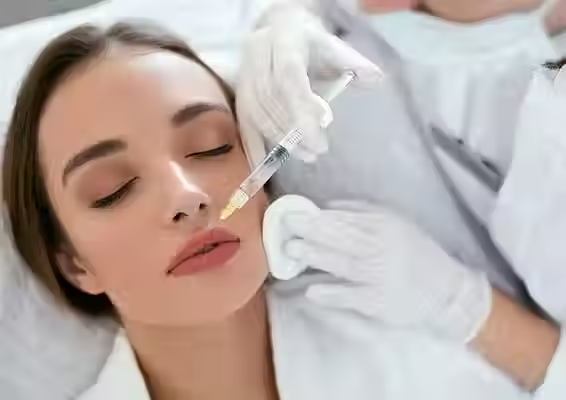
A frequent misconception in aesthetic medicine is that the outcome depends solely on the volume of product inside the syringe. In reality, the skill, anatomical precision, and artistic eye of your injector are far more critical.
A poorly placed 0.5 ml can look unnatural or cause lumps, while a masterfully placed 1 ml can look completely seamless, soft, and undetectable. Key technical factors include:
Anatomical Depth Control: Knowing whether to place product supraperiosteally (deep on the bone for structural lift), into subcutaneous fat compartments, or superficially inside the mucosal layer.
Micro-Droplet Placement: Dispersing product evenly in minuscule aliquots prevents localized lumps and ensures dynamic tissue flexibility.
Instrument Selection: Utilizing blunt-tipped microcannulas alongside ultra-fine needles minimizes tissue trauma, reduces bruising, and improves safety around critical vascular structures.
Comfort Optimization: Incorporating advanced topical anesthetics and precise product-integrated lidocaine ensures a relaxed, pain-managed experience—such as our tailored approach to 1 ml filler numbing.
Choosing the Right Product Formulation and Longevity
Not all dermal fillers behave the same way under the skin. Formulations vary in density, elasticity (G-prime), cohesivity, and water absorption capacity.
Modern cosmetic injectables rely primarily on cross-linked hyaluronic fillers—formulated with a naturally occurring sugar molecule that binds water to provide internal structure and hydration.
Low-Density vs. High-Density Hyaluronic Acid Formulations
Depending on your aesthetic goals, your provider will select a product tailored to tissue depth and mobility:
Low-Density, High-Cohesivity Gels: Formulations featuring Cohesive Polydensified Matrix (CPM) technology with a concentration of 20 mg/ml of hyaluronic acid integrate smoothly into superficial layers using micro-injection or blanching techniques, effectively smoothing delicate periorbital lines and perioral creases without creating lumps or the Tyndall effect (a bluish hue under the skin).
Balanced, Flexible Gels for Mobile Areas: Premium hyaluronic acid collections such as Restylane (including Kysse), Juvederm (such as Volbella or Ultra XC), and Versa are engineered for dynamic tissue movement. They provide soft fullness, distinct border definition, and smooth integration in the lips and smile lines.
How Long Results Typically Last and Maintenance Schedules
On average, a 1 ml hyaluronic acid treatment remains visible for 6 to 12 months. For low-density formulations, results consistently remain for up to 9 to 12 months depending on the treatment area and technique.
Key factors influencing filler longevity include:
Individual Metabolic Rate: Patients with highly active metabolisms or athletic lifestyles break down hyaluronic acid faster.
Tissue Mobility: High-movement zones (such as the lips and mouth) break down filler more rapidly than low-mobility zones (like the tear troughs or temples).
Product Rheology: Highly cross-linked, dense gels degrade slower than fine, superficial formulations.
Enzymatic Activity: Natural variations in your body's intrinsic hyaluronidase enzyme regulate the rate of filler reabsorption.
To sustain your ideal contours, touch-up sessions are typically scheduled every 6 to 9 months to maintain volume before the product completely dissolves.
Safety Considerations, Contraindications, and Swelling Management
While hyaluronic acid fillers maintain an exceptional safety profile, any injectable treatment requires medical expertise and strict clinical protocols to minimize complications.
Managing Common Side Effects and Post-Treatment Swelling
Post-injection swelling, mild tenderness, and localized bruising are normal responses to needle entry and hyaluronic acid hydration.
Understanding the Swelling Timeline: Immediate fullness right after your appointment is primarily inflammation, not your final aesthetic outcome. Understanding lip filler swelling helps you navigate the first few days with realistic expectations.
Duration: Most patients wonder how long does lip filler swelling last; swelling typically peaks within 24 to 48 hours and gradually resolves over 5 to 7 days.
Comfort Measures: Applying clean cold compresses in 10-minute intervals helps minimize acute edema. In certain cases, asking your provider whether can antihistamine reduce lip filler swelling can help manage pronounced inflammatory histamine responses.
Recovery Tips: Avoid vigorous exercise, saunas, steam rooms, and alcohol for 24 to 48 hours to prevent additional fluid retention and bruising.
Contraindications and Recognizing Adverse Complications
To ensure safety, patients should not receive dermal filler treatments if they have:
Active skin infections, cold sores (herpes simplex), or open lesions near the injection site
Pregnancy or current breastfeeding
Known severe allergies to hyaluronic acid or local anesthetics (e.g., lidocaine)
Active autoimmune flare-ups or bleeding disorders
Understanding Rare Complications:While serious side effects are rare when treated by experienced medical practitioners, the most critical risk is an inadvertent vascular occlusion (where filler enters or compresses a blood vessel).
Signs include severe, disproportionate pain, immediate skin blanching (whitening), or a mottled, purplish net-like discoloration (livedo reticularis).
Because hyaluronic acid is dissolvable, an injector can immediately administer hyaluronidase—an enzyme that breaks down the gel within hours—to quickly restore normal blood flow and protect the tissue.
Frequently Asked Questions About 1 ml Filler Treatments
Is 1 ml of filler noticeable to other people?
In the first few days, minor swelling may make your lips or treated zones appear fuller than anticipated. Once healed (after 10 to 14 days), 1 ml produces a refined, noticeable improvement that still blends naturally with your surrounding features. Friends and colleagues typically notice you look refreshed, well-rested, or lightly contoured without realizing you had an injectable treatment.
Can 1 ml of filler be split between different facial areas?
Yes. A single 1 ml syringe can be apportioned across complementary facial zones during the same appointment—for instance, placing 0.5 ml into the lips for subtle definition and using the remaining 0.5 ml to smooth nasolabial folds or superficial lines around the mouth. Syringes cannot, however, be saved or stored for a later date once opened due to strict medical sterility standards.
How long does it take for 1 ml of filler to settle?
It takes approximately two full weeks for dermal filler to fully integrate with your natural tissues, for acute swelling and minor bruising to resolve, and for the hyaluronic acid to reach its optimal water-binding balance. We always evaluate final outcomes at a two-week follow-up appointment before considering any adjustments.
Conclusion
A single 1 ml syringe provides an ideal, versatile balance for natural aesthetic rejuvenation. Whether you want to restore youthful lip definition, smooth superficial facial lines, or subtly contour your midface, the key to an elegant, undetectable outcome lies in personalized treatment planning and precise anatomical placement.
At Loveland Medical Spa, our board-certified clinical team combines advanced injection techniques with individualized aesthetic strategies to help you achieve balanced, radiant results. We proudly serve patients throughout South Florida, including Aventura, Miami, Hollywood, Hallandale Beach, Sunny Isles Beach, North Miami Beach, North Miami, and Fort Lauderdale.
For an in-depth look at lip enhancement techniques, review our 1mm Lip Filler Complete Guide, explore our full range of aesthetic therapies at Loveland Medical Spa, or schedule your consultation to begin your personalized aesthetic journey today.


Comments