

A Comprehensive Guide to Facial Rejuvenation Treatment Options

Facial Rejuvenation Treatments: A Personalized, Whole-Face Approach

The most effective facial rejuvenation treatments do not chase one wrinkle or one area of volume loss. They assess the whole face, then combine the right options for your goals: fillers for support and volume, neuromodulators for expression lines, collagen-stimulating treatments for firmer skin, and skin-resurfacing care for texture and tone.
Facial aging happens at several levels. Bone support can gradually change, fat pads can shrink or shift, muscles create repeated expression lines, and the skin loses collagen and elasticity. That is why a personalized plan often looks more natural than relying on a single treatment or adding filler everywhere.
A skilled provider can build treatment from the deeper facial structure outward. This may include restoring support in the cheeks or jawline, relaxing selected muscles, improving laxity with energy-based treatments, and refining the skin's surface. For some patients, regenerative options such as platelet-rich plasma (PRP) can also support skin quality with little downtime.
I am Aalaa Ahmad, MSN, APRN, FNP-BC, a board-certified Nurse Practitioner with more than 14 years of clinical experience, including a decade in intensive care and neuroscience. I specialize in personalized facial rejuvenation treatments, including injectables, laser therapies, and microneedling, helping patients pursue balanced, natural-looking results without surgery.

Understanding the Anatomical Layers of Facial Aging
To understand why modern aesthetics favors a combined strategy, we must look at facial anatomy. The human face is not just a sheet of skin stretched across muscle; it is a complex, three-dimensional structure comprising five distinct anatomical layers:
Bone and retaining ligaments (the structural scaffold)
Deep fat compartments (fixed volume cushions)
Muscles and the Superficial Musculoaponeurotic System (SMAS) (dynamic movement and tension)
Superficial fat pads (soft contours and transitions)
Dermis and epidermis (skin elasticity, hydration, and surface tone)
As we age, time leaves its mark on every single one of these tiers. Treating only the outer surface when the foundational frame has shifted is like repainting a house that needs its foundation leveled—it simply cannot deliver the best long-term outcome.

Bone Remodeling and Structural Volume Loss
Structural aging begins at the deepest level: the skeleton. Over time, predictable patterns of bone resorption occur. The orbital rims (eye sockets) widen and recede, the pyriform aperture around the nose expands, and the zygomatic arch (cheekbone) and jaw lose projection.
When the underlying bone recedes, the retaining ligaments that anchor tissue to the skeleton lose their tension. This loss of foundational support causes the overlying fat and muscle to shift downward. By incorporating advanced facial contouring strategies, we can structurally re-anchor these retaining ligaments and restore the projection of a youthful facial architecture.
Soft Tissue Descent and Dermal Quality Degradation
Above the bone, the deep fat compartments begin to deflate, while superficial fat pads separate and descend, contributing to nasolabial folds, jowls, and under-eye hollowing. Simultaneously, repetitive muscle contractions create dynamic rhytids (expression lines) that eventually turn into static creases.
At the skin level, fibroblasts produce less collagen and elastin each year. Environmental stressors, such as UV exposure in South Florida, accelerate elastin fragmentation and dermal thinning. Combining deep structural work with regenerative energy therapies—such as laser skin regeneration and microneedling with rf—helps rebuild dermal thickness and tighten lax skin from within.
Core Modalities in Modern Facial Rejuvenation Treatments
No single product or machine can simultaneously lift deep tissue, rebuild lost bone, smooth dynamic wrinkles, and polish epidermal texture. True rejuvenation relies on a multimodal toolkit.
Modality Category | Primary Mechanism of Action | Target Anatomical Layer | Ideal Clinical Indications |
Hyaluronic Acid (HA) Fillers | Physical volumization and moisture retention | Deep periosteum, deep/superficial fat | Cheeks, temples, jawline, lips, folds |
Biostimulators (CaHA, PLLA) | Neocollagenesis and tissue redensification | Deep subcutaneous, subdermal planes | Volume restoration, skin tightening |
Neuromodulators (BoNT-A) | Acetylcholine release blockade | Mimetic facial musculature | Crow's feet, forehead lines, frown lines |
MFU-V / Ultrasound | Focused thermal coagulation points | SMAS, deep subcutaneous, dermis | Non-invasive lifting, tissue tightening |
Autologous Biologics (PRP) | Growth factor release, cellular repair | Subdermal, intradermal | Cellular repair, radiance, fine lines |
Laser & Chemical Resurfacing | Controlled ablation / thermal injury | Epidermis, papillary dermis | Dyschromia, sun damage, rough texture |
Integrating Dermal Fillers and Biostimulators in Facial Rejuvenation Treatments
Dermal injectables serve distinct purposes depending on their rheology (viscosity, elasticity, and cohesivity). When choosing between products, we select materials matched to the specific mechanical demands of each anatomical layer.
For structural lifting along the cheekbones and jawline, high-elasticity facial fillers like juvederm Voluma or firmer restylane formulations provide sharp projection. For biostimulatory collagen synthesis, we turn to advanced regenerative agents:
Calcium Hydroxylapatite: Composed of CaHA microspheres suspended in a carboxymethylcellulose (CMC) gel, this agent provides immediate mechanical lift followed by long-term collagen and elastin synthesis. When hyperdiluted, it works as a pure skin-firming biostimulator without adding bulk.
Poly-L-Lactic Acid: PLLA stimulates your body's fibroblasts gradually, restoring diffuse volume loss across the temples, midface, and lower face over several months.
Neuromodulators and Energy-Based Skin Tightening
While fillers and biostimulators restore lost structure, neuromodulators—including botox dysport and pure incobotulinumtoxinA—rebalance muscular tension. In addition to smoothing dynamic lines on the upper face, micro-doses of neurotoxins can be placed intradermally to reduce pore size and improve skin tone.
To address tissue laxity without surgery, Microfocused Ultrasound with Visualization (MFU-V) delivers acoustic energy directly into the SMAS and deep dermal layers. By creating precise micro-thermal coagulation zones, MFU-V triggers immediate tissue contraction and long-term neoelastogenesis. When combined with laser resurfacing for skin tightening, energy devices provide deep structural lift alongside surface refinement.
The Multi-Layered Approach to Whole-Face Restoration
Achieving natural, balanced results requires a clear foundation-to-surface hierarchy. Rather than treating individual lines in isolation, an expert panel of dermatologists and plastic surgeons with over 85 years of combined clinical experience recently outlined the clinical power of a multimodal layered protocol in Plastic and Reconstructive Surgery – Global Open.

Stepwise Treatment Sequencing from Bone to Skin Surface
An optimal layered protocol respects the underlying facial architecture:
Step 1: Foundational Skeletal Support & Ultrasound Lifting
We begin by evaluating structural bone loss and applying deep periosteal micro-boluses of firm HA or CaHA to restore projection at the zygomatic arch and piriform aperture. Energy-based lifting (MFU-V) is applied early in the plan to lift the SMAS and deep subcutaneous tissue before any superficial filler placement.
Step 2: Muscular Balancing
Targeted neuromodulator injections moderate the downward pull of depressor muscles (such as the platysma and depressor anguli oris), allowing elevator muscles to lift facial features naturally.
Step 3: Fat Pad Re-volumization
Softer hyaluronic acid variants are placed into the deep and superficial fat compartments to smooth transitions between facial zones and restore youthful cheek curves.
Step 4: Dermal Redensification and Surface Polishing
We finish in the dermal and epidermal layers using hyperdiluted biostimulators, skin-smoothing micro-toxins, chemical peels, or a medical-grade hydrafacial to eliminate dullness and clear cellular debris.
Clinical Outcomes of Layered Facial Rejuvenation Treatments
The clinical data behind this anatomical approach is compelling. In clinical evaluations of layered rejuvenation protocols, 100% of patients evaluated at day 90 achieved ratings of "improved" or "much improved" on the Global Aesthetic Improvement Scale (GAIS).
Furthermore, every patient demonstrated an improvement of 1 point or more on validated 5-point clinical scales evaluating skin laxity, wrinkle depth, and erythema. By addressing all five tissue layers systematically, delicate areas like tear troughs with under-eye fillers and the perioral frame with subtle lip fillers integrate seamlessly into the overall facial harmony.
Autologous Regeneration: The Vampire Facelift Protocol
For patients seeking structural rejuvenation alongside cellular tissue repair, autologous biologics offer a compelling solution. The Vampire Facelift (PRP Facelift) combines the immediate structural support of hyaluronic acid filler with the regenerative healing power of autologous Platelet-Rich Plasma (PRP). As detailed in the Cleveland Clinic guide to PRP facelifts, this procedure uses the patient's own concentrated growth factors to revitalize dull, aging skin.
Mechanism and Immediate vs. Long-Term Results
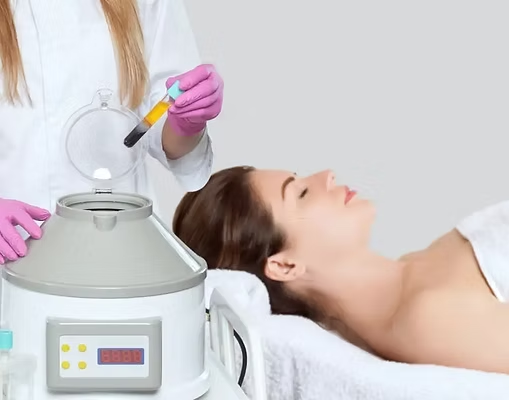
The procedure begins with a standard blood draw. The blood is processed in a specialized centrifuge to separate red and white blood cells from platelet-rich plasma. Platelets are natural storehouses of healing growth factors, including PDGF (Platelet-Derived Growth Factor), TGF-beta, and VEGF (Vascular Endothelial Growth Factor).
During a Vampire Facelift:
Immediate Plumping: Hyaluronic acid dermal filler is placed precisely into targeted zones to restore lost volume and structural support instantly.
Subdermal Growth Factor Injection: The concentrated PRP is injected into the upper dermis and subdermal plane using a gentle cannula or fine needle.
Neocollagenesis Timeline: While the filler delivers immediate volume, the activated PRP stimulates microvascular circulation and cellular turnover. Patients typically begin seeing noticeable skin smoothing, brightening, and textural improvement around two weeks post-treatment.
Longevity: Results from a complete Vampire Facelift typically last between 12 and 18 months. To optimize longevity, some treatment plans incorporate monthly booster injections for the first three months.
PRP Facial Treatments and Other Non-Surgical Rejuvenation Options
It is important to distinguish between a PRP Facelift (Vampire Facelift) and a prp facial (Vampire Facial):
PRP Facelift: Involves deep injections of dermal filler paired with injectable PRP to address both deep volume loss and dermal thinning.
PRP Facial: Applies PRP topically across the skin, driving it into the micro-channels created by microneedling to target surface texture, enlarged pores, superficial acne scarring, and tone.
Both options offer exceptional safety profiles because PRP is autologous (derived entirely from your own body), which eliminates the risk of allergic reactions. Downtime is minimal—most patients experience mild swelling, redness, or minor bruising for 2 to 5 days, returning to regular social activities almost immediately.
Frequently Asked Questions about Facial Rejuvenation
How long do the results of non-surgical facial rejuvenation treatments last?
Longevity depends on the specific modalities used, the patient's metabolic rate, and the depth of treatment:
Hyaluronic Acid Fillers: Typically last between 9 and 24 months, depending on product thickness and placement depth.
Biostimulators (Sculptra / Radiesse): Stimulate your own natural collagen network, with benefits lasting up to 2 years or longer.
Neuromodulators (Botox / Dysport): Typically maintain dynamic muscle relaxation for 3 to 4 months.
PRP Facelift: Delivers sustained rejuvenation for approximately 12 to 18 months.
Energy-Based Lifting (MFU-V / RF Microneedling): Triggers structural remodeling that lasts 12 to 24 months as natural aging continues.
An annual maintenance schedule allows you to sustain and build upon your results without drastic swings in appearance.
What is the difference between a vampire facelift and a vampire facial?
The core difference lies in the delivery method and the depth of correction:
A Vampire Facelift uses subdermal injections combining hyaluronic acid filler and concentrated PRP to lift deflated contours, restore structural volume, and stimulate deep collagen production.
A Vampire Facial pairs topical PRP with microneedling. The microneedles create thousands of microscopic epidermal channels that allow growth factors to penetrate the superficial dermis, focusing on pore size, superficial fine lines, hyperpigmentation, and skin radiance.
How do providers determine the proper sequence for combination treatments?
An experienced provider designs your treatment sequence based on tissue depth, healing times, and product interactions:
Foundation First: Deep structural energy treatments (like MFU-V) or deep periosteal filler boluses are performed first to re-establish the structural frame.
Muscle Rebalancing: Neuromodulators are administered to calm hyperactive muscle groups.
Mid-to-Superficial Layering: Softer dermal fillers, hyperdiluted biostimulators, and autologous PRP are layered into the subcutaneous and dermal beds.
Surface Refinement: Superficial chemical peels, laser resurfacing, or microneedling complete the plan, ensuring each layer heals cleanly without interfering with underlying injectables.
Conclusion
Modern facial rejuvenation is an art built on anatomy. True, natural-looking youthfulness does not come from over-filling a single line; it comes from respecting the natural balance between bone, muscle, fat, and skin.
At Loveland Medical Spa, our board-certified clinical team specializes in personalized, multi-layered treatment plans tailored to your unique facial anatomy. Whether you are looking to restore lost midface volume, firm lax skin, or refresh your natural glow, we invite you to explore our advanced facial rejuvenation solutions.
Ready to revitalize your skin? Visit Loveland Medical Spa today or book services to schedule your comprehensive aesthetic consultation at our Aventura clinic, proudly serving clients throughout Miami, North Miami Beach, Sunny Isles Beach, Hallandale Beach, Hollywood, and Fort Lauderdale.


Comments